






900+ clinicians shared our products on FrontrowMD, with no compensation.
KEY TAKEAWAYS
- Eczema affects around 1 in 5 Australian school-age children — making it one of the most common chronic conditions in classrooms
- Research shows 68% of children with eczema report it affects their school day — through poor concentration, fatigue, self-consciousness, and difficulty writing when hands are flared
- Children with severe eczema are significantly more likely to require additional learning support than their peers
- Sleep disruption from overnight itch is one of the biggest hidden drivers of poor school performance — a child who scratched all night cannot concentrate the next day
- Sport, swimming, and PE don't have to be off-limits — they just need a little preparation
- A consistent daily routine applied at home can help protect the skin through the school day
Eczema at School: More Than a Skin Problem
Most people see eczema as a skin condition. Teachers see a child who can't stop scratching. Parents see a child who came home from school exhausted and miserable, again.
Eczema at school is a quality-of-life issue as much as a medical one. It affects concentration, confidence, friendships, sport, and sleep — and all of those things circle back to how a child feels and performs at school, day after day.
Eczema-prone skin has a structurally weaker outer barrier — it loses moisture faster, reacts to smaller triggers, and is harder to keep calm than normal skin. That vulnerability is what makes the school environment particularly challenging.
A compromised barrier also gives Staphylococcus aureus (Staph bacteria) a foothold. Staph is present on most eczema-prone skin and produces toxins that drive inflammation and itch — keeping the flare cycle going even after the original trigger is long gone.
Why School Makes Eczema Harder
The school environment has more eczema triggers per square metre than most other settings.
Central heating dries the air in classrooms, stripping moisture from already-compromised skin. Synthetic uniforms trap heat and create friction. Art materials, clay, and cleaning products all carry irritants. The physical and emotional stress of a full school day raises cortisol — and chronically elevated cortisol lowers the skin's threshold for reacting.
Then there's the social side. Research from the Avon Longitudinal Study of Parents and Children found that children with persistent eczema were significantly more likely to report being bullied than peers without it — and more likely to show signs of anxiety and withdrawal. For a child who's already tired from broken sleep, the social pressures of school add another layer to an already heavy load.
None of this is inevitable. But it helps to name it before you can manage it.

The Sleep Problem Nobody Talks About at School
If there's one thing that connects eczema to school performance more than anything else, it's sleep.
Itch peaks overnight. Skin temperature rises during sleep, which amplifies the itch signal. The warm environment under bedding promotes Staph bacteria on the skin surface — and Staph produces toxins that directly activate itch receptors, making the overnight environment even more hostile for eczema-prone skin.
The result is a child who's been scratching since midnight, arrived at school already exhausted, and whose itch threshold is lower than usual because sleep deprivation raises cortisol and makes the skin harder to keep calm.
A landmark Danish study of over 770,000 school children found that children with severe eczema had significantly lower graduation grades than those with mild eczema. The connection between eczema severity and academic outcomes is real — and sleep disruption is the primary mechanism driving it.
A good before-bed routine makes a direct difference: lukewarm bath, applying a barrier and Staph-fighting product while the skin is still slightly damp, a cool bedroom, cotton bedding washed in fragrance-free detergent. What happens to the skin overnight determines how a child arrives at school in the morning.

Talking to Teachers: What to Say and What to Ask For
Most teachers don't know much about eczema. Without guidance, they might mistake a flare for something contagious, or read a child's distraction and irritability as behavioural rather than physical.
A brief conversation at the start of term goes a long way. Key points:
Eczema is not contagious. Classmates can't catch it. Saying this clearly gives a teacher the words to reassure other students — and helps prevent the social isolation that often follows a visible flare.
Scratching is not defiance. A child scratching during class is managing a physical symptom, not acting out. Knowing this changes how a teacher responds — and how a child feels about being seen.
Ask for practical accommodations. A child with hand eczema may struggle with prolonged writing. A child in a flare may need to apply cream during the day. Knowing there's somewhere they can step out briefly, without drawing attention, makes a real difference to how they manage at school.
Uniforms and PE kit. Many schools have some flexibility on materials. It's worth asking whether a cotton underlayer is allowed under synthetic uniform, or whether a loose cotton sports shirt can substitute for a standard synthetic PE top.
PE, Sport, and Swimming
One of the most common mistakes is telling children with eczema to avoid sport. Exercise matters — for physical health, for confidence, and for the mental wellbeing that children managing chronic conditions often find hardest to protect.
The goal isn't avoidance. It's preparation.
Sweat is one of the more reliable itch triggers for eczema-prone skin. Rinsing off as soon as possible after exercise — with lukewarm water, not hot — and applying a barrier product promptly removes sweat before it has time to irritate.
Synthetic fabrics trap heat and create friction. Where possible, choose natural-fibre sportswear — loose-fitting cotton or bamboo for training. For contact sports, moisture-wicking fabrics that reduce friction are better than standard polyester.
Swimming needs some preparation but doesn't have to be off-limits. Chlorinated water can dry and irritate sensitive skin, but swimming itself is excellent exercise. Applying a barrier cream before getting in creates a physical layer between skin and water. Rinsing off immediately after — and applying cream again before the skin fully dries — is the step most families skip but it makes the biggest difference.
Keeping a good eczema cream for kids in their school bag means they can apply it before PE, after sport, or any time during the day when a flare is building — without needing to come home first.

Managing Itch During the School Day
A child who's visibly scratching during class is already in a tough spot. Getting ahead of the itch before it becomes unmanageable is more effective than trying to stop scratching once it's taken hold.
Keep nails short and clean. Short nails do significantly less barrier damage when scratching happens — and it will happen, especially with younger children who haven't yet developed ways to manage the urge.
A travel-size barrier product in the bag. Applying cream to an area that's starting to flare — during a break, before it becomes intense — is far more effective than waiting until the end of the school day. This only works if the child has access to it and feels comfortable using it without embarrassment.
Cooling the skin briefly. A cool, damp cloth held against an itchy spot for 30 seconds can reduce the signal enough to get through a class. It's a simple technique a child can learn to use in a bathroom break.
Natural-fibre clothing. What a child wears to school all day matters. Cotton or bamboo against the skin reduces the friction-triggered itch that builds up through hours of sitting and moving.
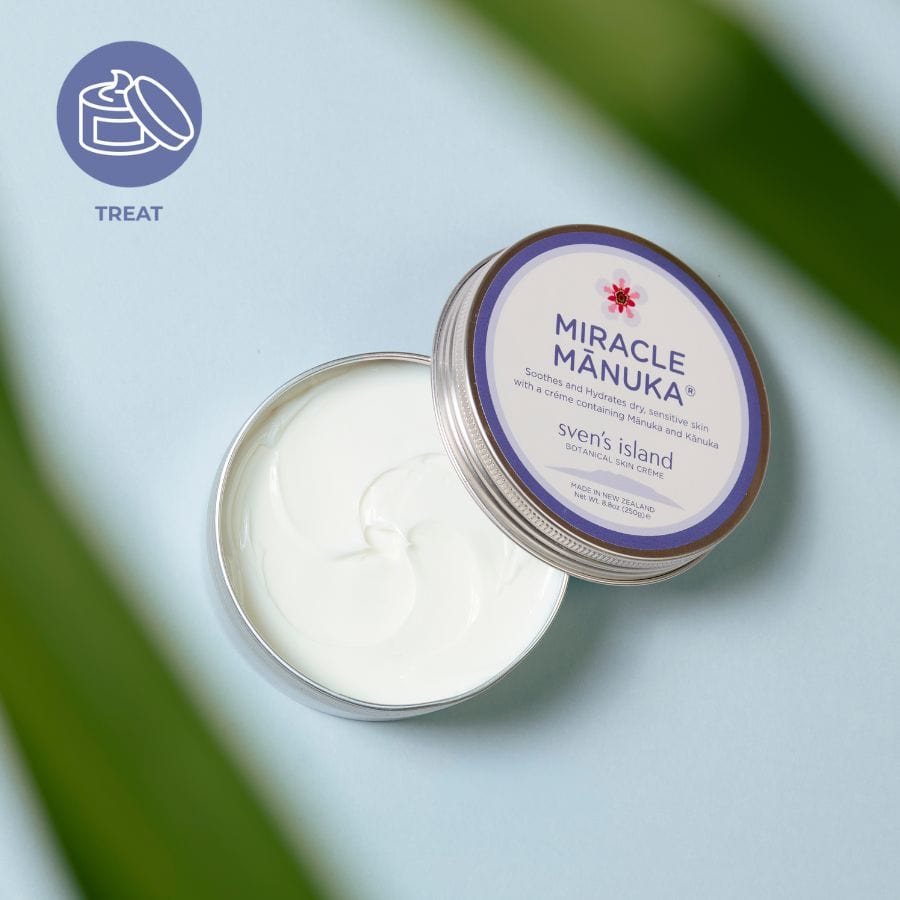
Sven's Island Miracle Manuka Cream is formulated with Manuka leaf oil and Kanuka, both clinically shown to fight Staph bacteria, alongside marshmallow root to support barrier repair.
Steroid-free, fragrance-free, and safe for daily use — compact enough to keep in a school bag. 95% of users noticed significant improvement after 2 weeks, and it's trusted by 150,000+ families managing eczema-prone skin.

The Daily Routine That Protects School Days
The most effective thing a parent can do for their child's eczema at school actually happens at home.
A consistent morning and evening routine — applied every day, through calm periods and flares alike — keeps the skin's bacterial balance stable and the barrier strong enough to handle what the school day throws at it. The quiet days between flares matter most. That's when the skin has the best chance to rebuild.
Morning: Apply barrier cream to known flare areas before school. It's the best starting point for what's ahead.
Evening: Lukewarm bath or shower, pat dry, apply cream while the skin is still slightly damp. Get ahead of the overnight window before it starts.
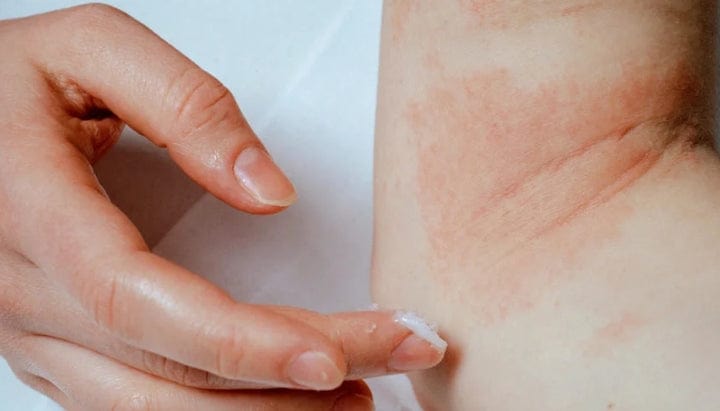
Between flares: Keep applying a barrier-repairing, Staph-fighting cream regularly. The skin is still fragile. Staph levels are still elevated. Consistent daily care is what gradually reduces both how often flares happen and how bad they get — making school days more manageable week by week.
What the Research Shows
Research consistently documents the wide-ranging impact of eczema on children's school experience. A 2024 mixed-methods cohort study from Ireland (the IMPEED study) found that 68% of children with eczema reported it affected their school day — through self-consciousness, difficulty concentrating, fatigue from disrupted sleep, and physical pain when hands were flaring.¹ The same study found that 69% had missed school, and that children with eczema were more than three times as likely to need additional educational support as the general school population.¹
A large Danish registry study of over 770,000 schoolchildren confirmed that severe eczema was significantly associated with lower graduation grades and lower IQ test scores — with the strongest effect in those with the most severe disease.² Sleep disruption is the key mechanism: research consistently shows that poor sleep quality and sleepiness have a measurable negative effect on school performance across all age groups.³
On the social side, a UK cohort study found that children with persistent eczema were significantly more likely to report being bullied than peers without the condition, and more likely to show anxiety and withdrawal.⁴
For swimming, a 2023 review confirmed that children with eczema are often advised not to swim — but that with appropriate preparation, swimming remains a viable and beneficial activity for most.⁵
Frequently Asked Questions
Should children with eczema avoid PE and sport? No — avoiding exercise is rarely the right answer. Physical activity matters for children's health and confidence. The key is preparation: appropriate clothing, rinsing off sweat promptly after exercise, and applying a barrier product before the skin fully dries. A travel-size cream in the school bag makes this practical.
How do I talk to my child's teacher about their eczema? Keep it brief and practical. Explain that eczema isn't contagious, that scratching is a physical symptom not misbehaviour, and ask for specific accommodations — permission to apply cream during breaks, some flexibility on uniform where possible, and awareness that fatigue from broken sleep may affect concentration and mood. Most teachers respond well to clear, specific information.
Can my child swim if they have eczema? Yes, with preparation. Apply a barrier cream before getting in to protect the skin from chlorinated water. Rinse off immediately after swimming — don't let chlorine dry on the skin. Apply cream again while the skin is still damp. This routine significantly reduces the impact of pool swimming on eczema-prone skin.
What's the best eczema cream for kids to keep at school? A fragrance-free, steroid-free barrier product that's safe for daily use and compact enough to fit in a school bag. It should address both the dryness and the bacterial drivers of eczema — so it works whether a child is applying it before PE or when a flare is starting. Look for Manuka leaf oil, clinically shown to fight Staph bacteria without stinging.
Why does my child's eczema always seem worse on school days? Several things converge at school: dry heated air, synthetic fabrics, physical and emotional stress, and the wear of a full day away from their usual routine. A consistent morning routine — so the skin starts the school day in the best possible condition — makes a real difference to how well it holds through the day.
Final Thought
Eczema at school is not just a skin problem. It's a sleep problem, a confidence problem, a concentration problem — and it deserves to be taken seriously.
The right daily routine at home, a good cream in their bag, and a teacher who understands what they're managing — these things make school genuinely more manageable.
Try Miracle Manuka Cream for 60 days. If your child's skin doesn't improve, get your money back — no questions asked.
References
¹ Cassidy A, et al. (2024). PA07 IMPEED study: preliminary results of the IMPact of Eczema on EDucational participation and achievement among children in Ireland. British Journal of Dermatology. https://consensus.app/papers/details/0a36ad4d89b05a66957e3904a697aec3/
² Vittrup I, et al. (2022). The association between atopic dermatitis, cognitive function and school performance in children and young adults. British Journal of Dermatology. https://pubmed.ncbi.nlm.nih.gov/34387358/
³ Dewald JF, et al. (2010). The influence of sleep quality, sleep duration and sleepiness on school performance in children and adolescents: A meta-analytic review. Sleep Medicine Reviews. https://pubmed.ncbi.nlm.nih.gov/20093054/
⁴ Teyhan A, et al. (2015). Child Allergic Symptoms and Well-Being at School: Findings from ALSPAC, a UK Cohort Study. PLoS ONE. https://pubmed.ncbi.nlm.nih.gov/25793873/
⁵ O'Connor C, et al. (2023). P11 Pooling the evidence: a review of swimming and atopic dermatitis. British Journal of Dermatology. https://consensus.app/papers/details/e24b0e576b915009a49a5754e51f7f15/
Don’t Miss These
Works well with SELF-CARE


- £7.00 GBP
-
£12.00 - £7.00 GBP
- -42%
- Unit price
- per


- £26.40 GBP
-
£65.00 - £26.40 GBP
- -32%
- Unit price
- per
- £35.20 GBP
-
£51.00 - £35.20 GBP
- -14%
- Unit price
- per


- £24.80 GBP
-
£60.00 - £24.80 GBP
- -48%
- Unit price
- per


