


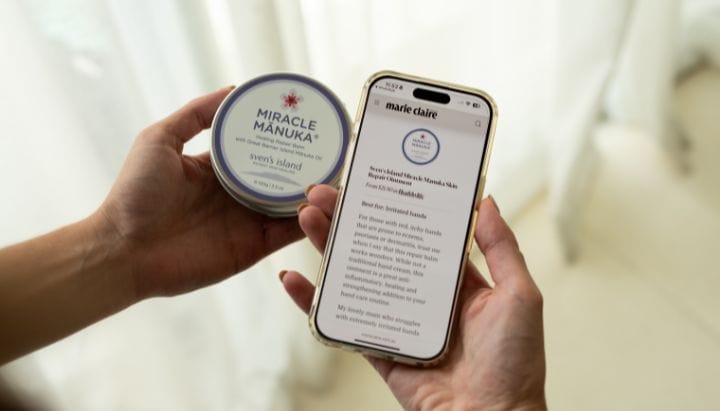



900+ clinicians shared our products on FrontrowMD, with no compensation.
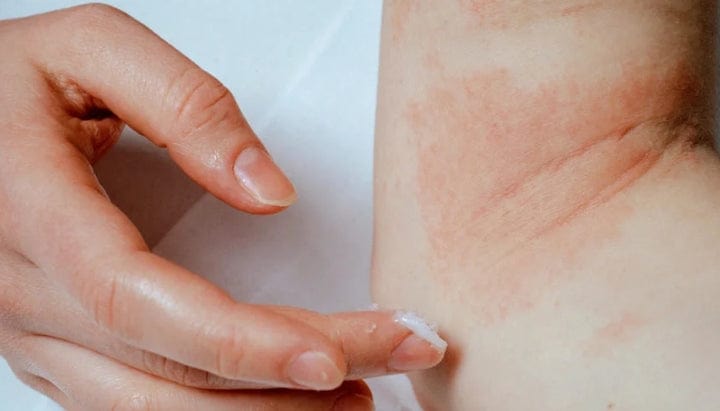
Eczema that keeps coming back usually has a reason.
Most people assume it's dryness, or allergies, or not finding the right cream yet. For most, there's something else going on — something most treatment plans never address.
Staphylococcus aureus (Staph bacteria) plays a much bigger role in how eczema behaves than most people are ever told. It's not the cause, but it's a key factor that makes it harder for skin to heal, keeping the cycle going.
The Real Drivers of Eczema
Eczema is driven by a combination of factors:
- A weakened skin barrier
- An overactive immune response
- Increased sensitivity to irritants and triggers
That's the foundation. But sitting on top of that foundation is something most eczema treatment plans never address: the balance of bacteria living on the skin.
Research shows that roughly 90% of people with eczema have significant colonisation of Staph on their skin — compared to just 5–30% of people without it. This isn't an infection in the traditional sense. It's a shift in the skin's microbial environment.
And when that balance shifts, the inflammatory response becomes harder to switch off, flares become more frequent, and the skin stays reactive even between visible flares.
Most creams don't address the bacterial environment directly. Which is why for many eczema sufferers, they produce short-term relief but not lasting improvement.
How Staph Keeps The Eczema Cycle Going
Eczema-prone skin is often linked to a genetically weaker skin barrier — which creates the perfect conditions for Staph to overgrow.
Healthy skin has a diverse microbiome — a mix of bacteria that keeps the environment balanced. In eczema-prone skin, that diversity is reduced, which means there are fewer protective bacteria to keep Staph in check.
Once Staph dominates, it releases toxins — including compounds called delta-toxins — that directly trigger immune responses, drive inflammation and itch, and damage the barrier proteins that hold the skin's structure together.
This is different from what most people assume is happening during a flare. It's not just inflammation responding to a trigger. Staph is actively making the barrier worse, which creates the conditions for more Staph, which creates more inflammation.
The eczema cycle looks like this:
- Skin barrier weakens
- Staph increases and releases toxins that trigger itch and inflammation
- Scratching opens micro-tears in the skin
- The barrier weakens further
- Staph increases again

This is the pattern most people with recurring eczema are actually dealing with, even if it's never been framed that way.
It also explains why eczema tends to flare in the same spots repeatedly. Even when a flare calms down and the skin looks clear, the barrier in that area is still compromised and Staph levels are still elevated.
The conditions for the next flare haven't been resolved — they've just quietened temporarily. This is why people describe feeling like they're always one trigger away from another flare. The underlying environment hasn't changed.
It also partly explains why eczema tends to be worse at night. Skin barrier function naturally dips overnight, cortisol levels drop, and the immune system becomes more active — all of which can amplify the inflammatory response that Staph triggers. If the bacterial balance on the skin is already off, nighttime becomes when the cycle runs hardest.
Why Standard Treatments Often Fall Short
Most eczema treatments focus on one part of the problem.
Steroid creams reduce inflammation. Moisturisers help with dryness. Both can be genuinely useful, particularly in the short term.
But neither directly addresses the bacterial imbalance on the skin. The visible symptoms settle, but the underlying environment hasn't changed. When your steroid course ends, or the moisturiser runs out, the same conditions are still there — and the flare returns.
This cycle is sometimes made worse by steroid rebound, where stopping steroids triggers a more intense flare than the original.
This is why so many people describe eczema as something they're managing rather than resolving. The approach is incomplete — not because the products don't work, but because they're only addressing part of what's driving the cycle.
Steroid creams in particular can create a dependency pattern over time: the skin improves while on them, worsens when they're stopped, and needs stronger or more frequent application to achieve the same result.
This isn't a failure of willpower or management — it's a predictable outcome of treating the inflammation without addressing the bacterial driver beneath it.
When Staph Progresses to a Bacterial Infection
There's an important difference between bacterial imbalance and a true bacterial infection.
Most of the time, Staph is present on eczema skin without obvious signs of infection. It's part of the skin environment, just in higher amounts than normal. But when the barrier is severely compromised, that balance can tip into something that needs medical attention.
Signs of a bacterial infection in eczema include:
- Weeping or crusting skin — yellowish fluid or honey-coloured crusts are a key indicator that infection has set in, rather than a standard inflammatory flare
- Pain or warmth at the site — eczema is usually itchy, not painful; localised pain or heat signals something beyond typical inflammation
- Rapid, significant worsening — if a flare escalates quickly and doesn't respond to usual management, an infection may be behind it
A true bacterial infection requires medical treatment, usually oral antibiotics. Waiting it out or applying more moisturiser won't resolve it. If you're seeing these signs, see a doctor immediately rather than managing it at home.
What Actually Helps Stabilise Eczema Long-Term
Lasting improvement comes from addressing the barrier and the bacterial environment together — consistently, not just during flares.
Support the barrier daily, not just when things are bad.
The skin barrier doesn't rebuild overnight, and reactive treatment keeps you in catch-up mode. Applying an emollient regularly — especially after bathing while the skin is still slightly damp — helps lock in hydration and gives the barrier the sustained input it needs to strengthen between flares.
Most people apply barrier cream only when skin is visibly bad, which means the barrier never gets the consistent support it needs to repair. Between flares is actually when barrier support matters most, because that's when the skin has the best chance to rebuild before the next cycle begins. For more information, see our guide on how to repair the skin barrier in eczema.
Address bacterial balance as part of your daily routine.
This is the step most routines miss entirely. Manuka leaf oil is clinically shown to fight Staph bacteria without disrupting the broader skin microbiome — meaning it reduces the problematic overgrowth without stripping the protective bacteria that healthy skin needs. Marshmallow root supports barrier repair by helping the skin rebuild its structure. Coconut oil helps maintain hydration and supports the skin's surface.
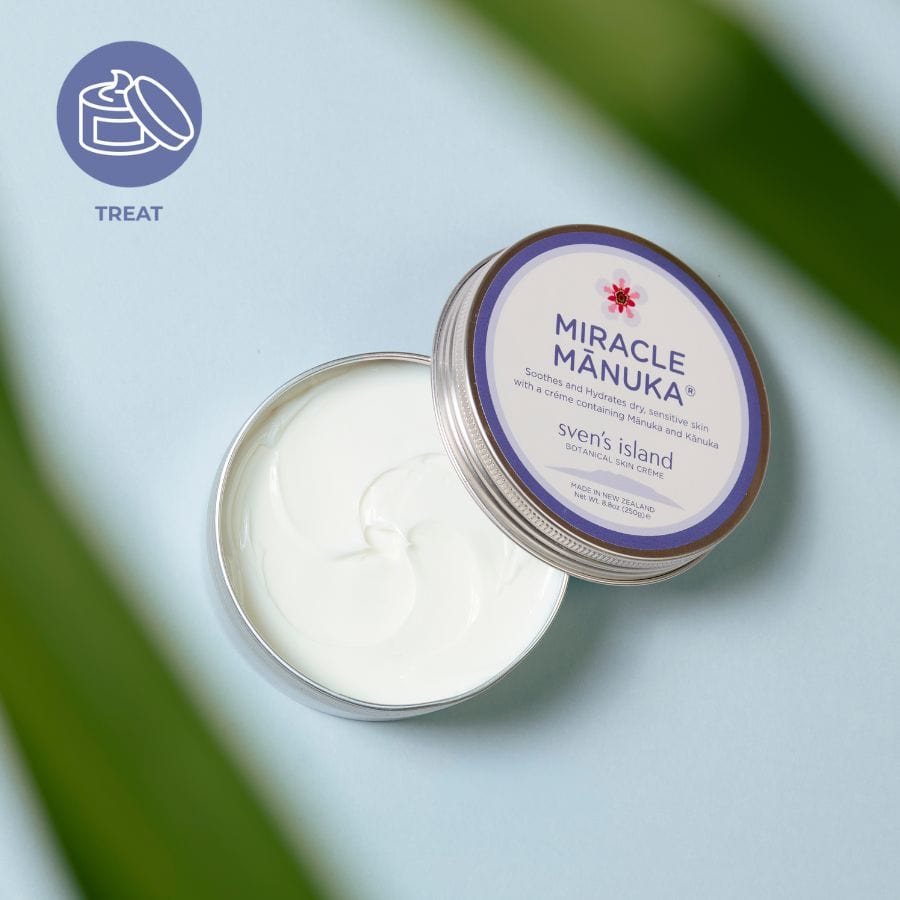
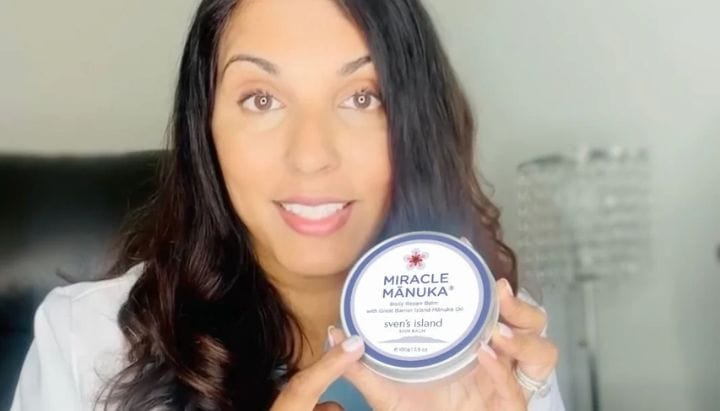
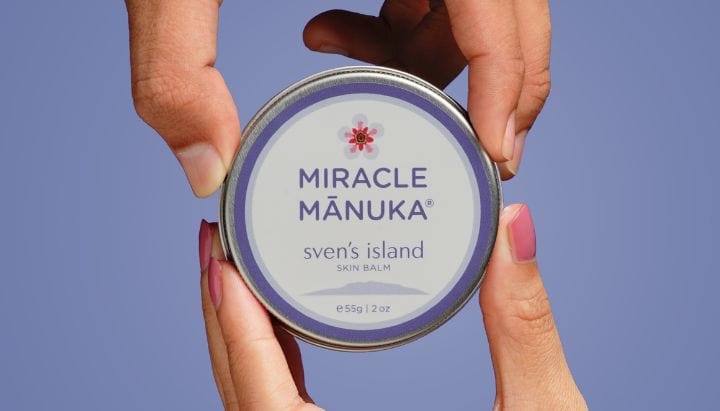
Using a product that combines all three means both sides of the cycle are being addressed in one daily step. Sven's Island Miracle Manuka Cream is formulated with this exact combination — antibacterial action alongside barrier repair, in a formula gentle enough for daily use from birth.
Manage triggers, but don't rely on avoidance alone.
Heat, sweat, friction, and irritants can all contribute to flares. Reducing them matters — particularly common ones like hot showers, fragranced products, and certain synthetic fabrics against the skin.
But if the barrier is still fragile and bacterial balance is still off, flares will continue even when triggers are minimised. The trigger isn't the root problem; it's the thing that tips an already-reactive skin environment over the edge. Avoidance helps most when it's part of a broader approach, not the main strategy.
Expect gradual change, not instant results.
Once both the barrier and the bacterial environment start to shift, change happens gradually. Less intense itching tends to come first. Then longer gaps between flares. Then skin that feels more stable and less reactive day to day — less likely to flare from minor triggers that previously caused problems. That gradual settling is the sign the underlying cycle is starting to break, not a sign that something isn't working.
Saying consistent through that period matters more than the product itself. Most approaches fail not because they're wrong but because they're abandoned before the skin has had enough time to stabilise. Four to six weeks of daily use tends to be the minimum needed to see a meaningful shift. Eczema that affects sleep is often one of the first things to improve as the skin settles; for more on that, see our article on eczema and sleep.
What the Research Shows
Research consistently shows that eczema involves a weakened skin barrier and bacterial imbalance working together to keep the skin reactive. The skin's outer layer depends on filaggrin protein to maintain its structure — when filaggrin mutations occur, which is common in eczema patients, tiny gaps form that let moisture escape and irritants penetrate more easily.¹
At the same time, Staph colonises up to 90% of eczema-affected skin during flares, compared to just 5–30% on healthy skin.² This overgrowth releases toxins that amplify inflammation and itch, and directly damages the barrier proteins that hold the skin structure together.³
Skin microbiome studies add further context: eczema-prone skin tends to have significantly less microbial diversity than healthy skin, meaning fewer protective bacteria to keep Staph in check.⁴ This reduced diversity makes it easier for Staph to dominate, which drives more inflammation and further barrier breakdown.
When both barrier repair and bacterial balance are addressed together, studies show meaningful reductions in flare frequency and severity.⁵ Addressing just one side — inflammation without bacteria, or hydration without barrier repair — consistently produces shorter-lived results.
In plain terms: Staph doesn't cause eczema, but it keeps the cycle going when the barrier can't hold it off.
Frequently Asked Questions
Can bacteria cause eczema to start?
Eczema isn't caused by bacteria alone — it's driven by a combination of barrier dysfunction, immune response, and genetic factors. But Staph can make symptoms significantly worse and harder to control once eczema is present.
Why does my eczema keep coming back in the same spot?
Because the local skin environment in that area hasn't fully stabilised. Even when a flare calms down visibly, the barrier is still compromised and Staph levels are still elevated — which means the conditions for the next flare are already in place.
Do I need antibacterial treatments for eczema?
Not in the medical sense — most people with eczema don't need prescription antibiotics. But including ingredients that help manage Staph as part of a daily routine, like manuka leaf oil, can make a meaningful difference to how often flares occur and how reactive the skin stays between them.
Can moisturisers fix bacterial imbalance?
Most standard moisturisers don't address bacterial balance directly. Some emollient bases may even support Staph growth. This is why moisturising alone often helps in the short term but doesn't prevent recurring flares.
Is eczema an infection?
No. Eczema is an inflammatory skin condition, not an infection. But it can sometimes become infected — particularly when the barrier is severely compromised and Staph levels are high. Signs of infection include pain, warmth, weeping, and rapid worsening. If these appear, see a doctor.
Final Thought
Eczema can feel confusing because it doesn't behave in a straight line. It improves, then returns, often without a clear reason.
Understanding that the cycle is being driven by both a fragile barrier and a bacterial imbalance — not just dryness or allergies — is what changes how you approach it.
Most treatments address one or the other. The ones that work long-term address both.
References
¹ Palmer CNA et al. (2006). Common loss-of-function variants of the epidermal barrier protein filaggrin are a major predisposing factor for atopic dermatitis. Nature Genetics, 38(4):441-446. https://www.nature.com/articles/ng1867
² Totté EEJ et al. (2016). Prevalence and odds of Staphylococcus aureus carriage in atopic dermatitis: a systematic review and meta-analysis. British Journal of Dermatology, 175(4):687-695. https://pubmed.ncbi.nlm.nih.gov/26994362/
³ Ong PY et al. (2017). Atopic dermatitis. Nature Reviews Disease Primers, 3:17024. https://www.nature.com/articles/nrdp201719
⁴ Kong HH et al. (2012). Temporal shifts in the skin microbiome of atopic dermatitis patients. Genome Research, 22(5):850-859. https://genome.cshlp.org/content/22/5/850.full
⁵ Carter DA et al. (2016). Therapeutic Manuka Honey: No Longer So Alternative. Frontiers in Microbiology, 7:569. https://www.frontiersin.org/articles/10.3389/fmicb.2016.00398/full
Don’t Miss These
Works well with SELF-CARE


- £7.00 GBP
-
£11.00 - £7.00 GBP
- -36%
- Unit price
- per


- £26.40 GBP
-
£63.00 - £26.40 GBP
- -32%
- Unit price
- per
- £34.40 GBP
-
£50.00 - £34.40 GBP
- -14%
- Unit price
- per


- £24.00 GBP
-
£59.00 - £24.00 GBP
- -49%
- Unit price
- per


