



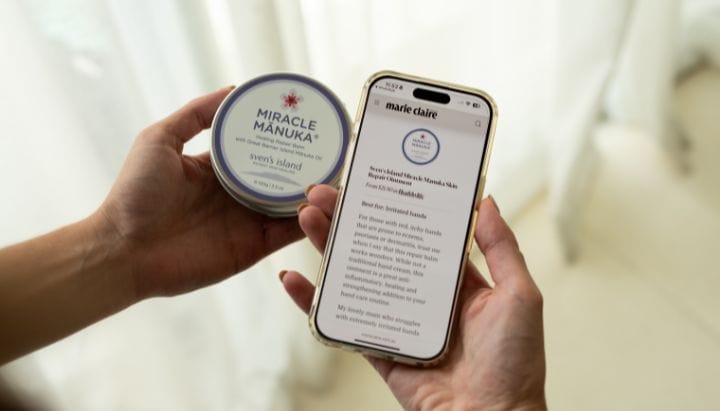



900+ clinicians shared our products on FrontrowMD, with no compensation.
Eczema that keeps coming back isn’t random.
It’s a predictable pattern...
You calm it down, your skin starts to improve, and just when you think you’ve figured it out – it flares again. Same spots. Same itch. Same frustration.
If that cycle feels familiar, it’s not because you’re doing something wrong. It’s because most eczema treatment focuses on symptoms – not the drivers that keep it coming back.
Why standard eczema treatment often falls short
Moisturisers and steroid creams aren’t useless. But on their own, they don’t address the two things that keep eczema cycling: a weakened skin barrier and a bacterial imbalance on the skin.
Research shows that roughly 90% of people with eczema have colonisation of Staphylococcus aureus (Staph) on their skin. This bacteria is associated with flares, increased irritation, and a more reactive skin environment.
This bacterial imbalance is a big part of why the itch keeps returning, especially when the skin barrier is already weakened, and most standard treatments don’t address it – which is why eczema can improve temporarily but then relapse in the same pattern.
The most common reasons eczema won’t heal
Treating flares instead of preventing them
Applying cream only when your skin flares keeps you stuck reacting instead of stabilising.
By the time a flare appears, the barrier is already compromised and the bacterial balance has already shifted. Daily care – even when skin looks calm – is what gradually reduces how often flares happen.
Relying on steroids alone
Steroid creams calm inflammation quickly – but they don’t address the bacterial imbalance or rebuild the skin barrier.
Over time, some people notice their skin becoming thinner, more reactive, or quicker to flare once they stop steroids.
Not addressing the bacterial component
This is the piece most people are never told.
Staph isn’t an infection in the usual sense. It’s a bacteria overgrowth that can sit on the skin and keep triggering irritation, especially when the barrier is already weakened.
Most moisturisers don’t target this, which can make it harder to keep flares under control.
This is also why some people feel like they’re doing everything right but still not seeing lasting improvement. The skin can look calmer on the surface, but if the bacterial balance hasn’t shifted, the underlying trigger is still there. Over time, that makes the skin quicker to react, even to small irritants that wouldn’t normally cause a flare.
A more complete approach includes ingredients that are clinically shown to fight Staph bacteria while still being gentle enough for daily use.
Your routine can quietly trigger flares
Hot showers feel soothing but…
They strip the skin’s natural oils, leaving the barrier more vulnerable immediately after. Lukewarm water helps protect that layer.
Some moisturisers feel good short-term but…
If your skin improves briefly but keeps relapsing, the formula may not be supporting barrier repair or bacterial balance.
“Sensitive skin” products aren’t always safe
Fragrance and certain preservatives are common irritants, even in products marketed for eczema-prone skin.
What actually helps break the cycle

Breaking the cycle comes down to three things: supporting the skin barrier, managing bacterial balance, and reducing the triggers that keep it going.
Barrier repair needs to be consistent
Once the skin barrier is compromised, it takes ongoing support to rebuild, as explained in how to repair the skin barrier in eczema.
Applying an emollient consistently, especially after bathing while skin is slightly damp, helps reduce moisture loss and strengthen the barrier over time.
Bacterial balance needs to be addressed alongside it
Ingredients like manuka leaf oil are clinically shown to fight Staph bacteria without disrupting the skin.
When paired with barrier-supporting ingredients like marshmallow root and coconut oil, this approach supports both sides of the cycle rather than just the dryness.
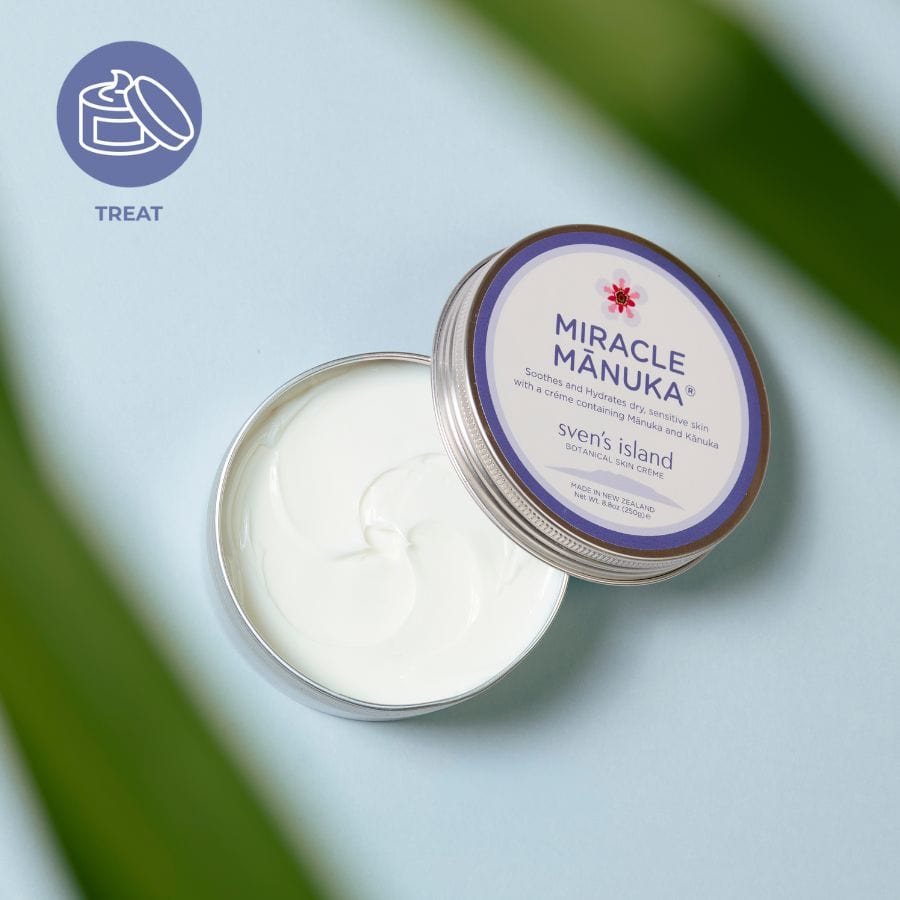
A formula like Sven's Island Miracle Manuka Cream is designed around this approach – supporting the skin barrier while helping fight Staph bacteria in one step.
Triggers still play a role, but they’re not the whole picture
Heat, sweat, friction, and certain foods can all contribute.
This is where a lot of routines fall short. It’s easy to focus entirely on avoiding triggers, without actually stabilising the skin itself. When the barrier is stronger and the skin environment is more balanced, those same triggers often become less reactive over time.
But removing triggers without supporting the barrier and bacterial balance often isn’t enough to stop recurring flares.
Consistency is key
Eczema that’s been active for months or years doesn’t stabilise in a few days.
Most people start to notice change over 4–8 weeks – less intense itching, longer gaps between flares, and skin that feels more stable day to day.
Those are usually the first signs that the relentless flare cycle is starting to break.
When eczema in children won’t settle
Scratching is harder to control but…
Keeping nails short and applying cream before bed can reduce overnight damage.
Steroid use needs more care...
Because children’s skin absorbs more, many parents move toward a short-term steroid approach followed by consistent maintenance.
Kids skin is thinner and more reactive...
So treatment tends to focus more on gentle, consistent barrier support, especially when it comes to toddler eczema treatment.
What to do if nothing has worked
It might not actually be eczema
Conditions like contact dermatitis or psoriasis can look similar. Patch testing can help identify triggers.
Look for signs of infection
Weeping, crusting, pain, or heat are potential bacterial infection symptoms, rather than a standard eczema flare.
Most of the time, it’s not misdiagnosis
It’s that treatment hasn’t addressed both the barrier and the bacterial component consistently. When both are supported together, the pattern tends to shift.
What the research shows
The connection between skin barrier damage, bacterial imbalance, and recurring eczema is well established in dermatology.
When the skin barrier is weakened, it develops small gaps that allow moisture to escape and irritants to enter more easily.¹ This makes the skin more reactive and prone to ongoing inflammation.
At the same time, Staph is present on the skin of up to 90% of people with eczema², compared to much lower levels in people without eczema. This imbalance is associated with increased irritation and more persistent flare cycles.
These two factors reinforce each other. A weakened barrier allows bacterial overgrowth, and that imbalance further disrupts the skin, creating a repeating cycle of flare, irritation, and recovery.³
Over time, repeated inflammation and scratching can change the structure of the skin itself, making it more prone to future flares if the underlying cycle isn't addressed.⁴
Research suggests that supporting bacterial balance alongside barrier repair is associated with fewer and less severe flares.⁵
In simple terms: eczema tends to persist when the barrier and bacterial balance aren’t addressed together.
Frequently asked questions
Why does my eczema keep coming back?
Because the underlying drivers – like barrier damage and bacterial imbalance – haven’t fully stabilised, even if the surface symptoms improve.
Can eczema go away completely?
Many people reach long periods of calm skin. The goal is usually long-term management rather than a permanent cure.
Could my moisturiser be making things worse?
Yes. Some formulas don’t support barrier repair or may not be suited to eczema-prone skin.
How long does it take to see improvement?
Most people notice meaningful changes over 4–8 weeks of consistent daily care that supports both bacterial balance and the skin barrier.
Does diet play a role?
For some people, yes. But it’s usually one part of a broader picture rather than the sole driver.
Final thought
Eczema that won’t settle isn’t a personal failure, and it isn’t a lack of effort.
Most people dealing with it have already tried more than enough.
The shift usually happens when you stop treating it as just dry skin or allergies, and start supporting both the barrier and the bacterial balance together, consistently.
Change doesn’t happen overnight – but over time, the cycle begins to break, and flares become less frequent and easier to manage.
References
¹ Palmer CNA et al. (2006), Nature Genetics. Filaggrin mutations cause barrier gaps. https://www.nature.com/articles/ng1867
² Totté EEJ et al. (2006), British Journal of Dermatology. 90% Staph colonization. https://pubmed.ncbi.nlm.nih.gov/16965415/
³ Kong HH et al. (2012), Genome Research. Barrier weakness enables bacterial shifts. https://genome.cshlp.org/content/22/5/850.full
⁴ Berdyshev et al. (2021), J Invest Dermatol. Chronic inflammation alters skin structure. https://pmc.ncbi.nlm.nih.gov/articles/PMC7830525/
⁵ Carter DA et al. (2016), Front Microbiol. Bacterial balance reduces flares. https://www.frontiersin.org/articles/10.3389/fmicb.2016.00398/full
Don’t Miss These
Works well with SELF-CARE


- £7.00 GBP
-
£11.00 - £7.00 GBP
- -36%
- Unit price
- per


- £26.40 GBP
-
£63.00 - £26.40 GBP
- -32%
- Unit price
- per
- £34.40 GBP
-
£50.00 - £34.40 GBP
- -14%
- Unit price
- per


- £24.00 GBP
-
£59.00 - £24.00 GBP
- -49%
- Unit price
- per


